
A Remote Is a Small Number of Parts With a Long Life
A remote control contains perhaps a dozen active components and a handful of passives. Its service life expectation is five to ten years. Its manufacturing reality is that most of those parts are commodity items with a lead time measured in weeks and a manufacturer notice measured in months. The gap between those two facts is where supply-chain risk lives.
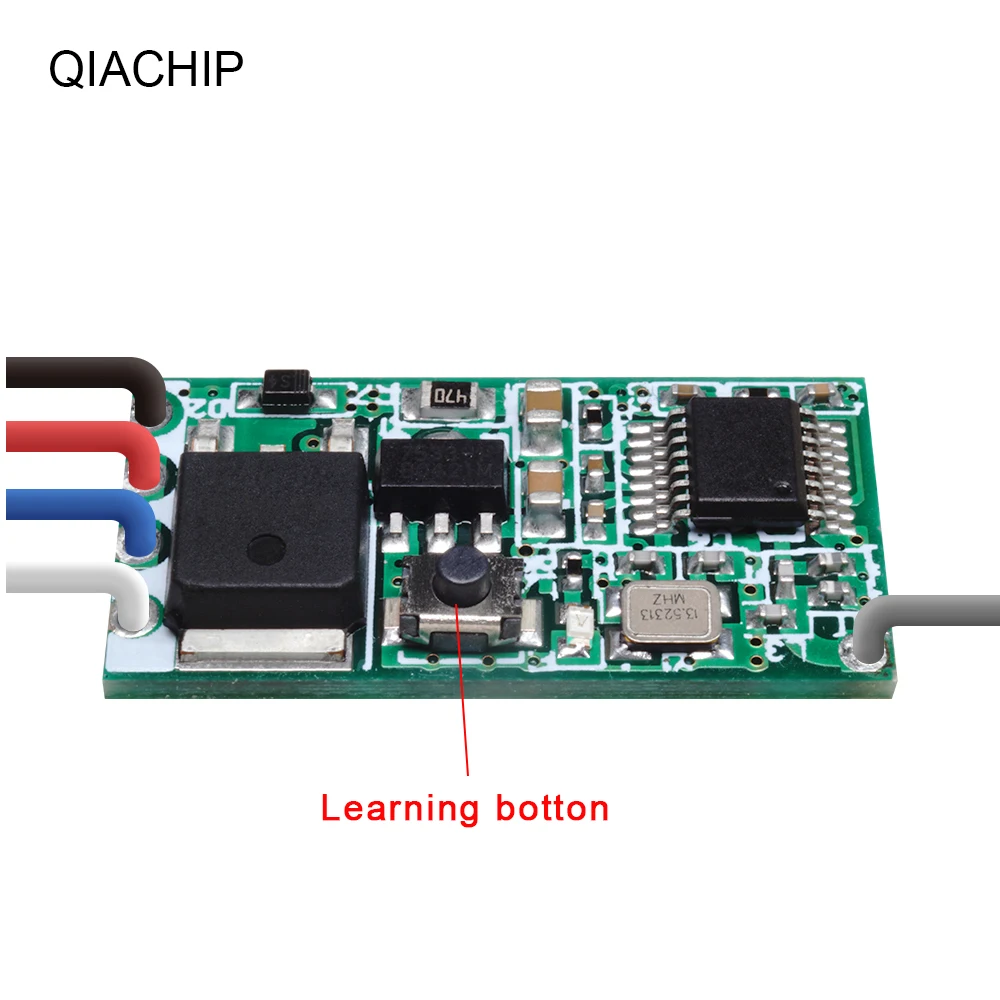
The Failure Mode Nobody Plans For
The typical scenario is not a factory shutting down. It is a chip that quietly becomes unavailable, a ceramic capacitor that goes on allocation, or a display module where the quoted lead time moves from eight weeks to thirty. In most of those cases the product is still sellable — the transmitter is fine, the housing is fine — but one component inside is now on a 120-day lead time, and the finished-goods stock is invisible to everybody until the day it is needed.
| Component | Exposure | Mitigation |
|---|---|---|
| RF transceiver / transmitter IC | Long, allocation-driven | Second source on the same footprint |
| Microcontroller | Moderate, flash-supply driven | Pin-compatible alternative qualified |
| Crystal | Long in allocation | Second frequency specified on the BOM |
| Ceramic capacitors | Allocation-driven in shortage | Value families kept broad |
| Battery holder | Stable | Tooling is a real cost |
| Display module | Very long | Usually the critical path in premium lines |
The Mitigations That Are Worth Their Cost
- Design for substitution from day one. A pin-compatible second source for the RF module and the microcontroller is worth far more than a discount on the primary. The second source only helps if the footprint was chosen for that reason at schematic stage.
- Hold strategic stock, not all stock. Keeping a few thousand units of long-lead parts on the shelf is cheap insurance; keeping finished goods of everything is not.
- Know the notice period. A supplier who can tell you the EOL notice their upstream suppliers give is a supplier who has a plan. One who cannot is exposed to the same surprise you are.
- Freeze the BOM after qualification. A last-minute component swap after the customer has approved samples is what turns a routine shortage into a programme delay.
How to Ask a Supplier Where the Real Exposure Is
The useful question is not “how long is your lead time” — every supplier says 15 days. It is: which single component, if it disappeared tomorrow, would stop you shipping, and what is the plan for it? A supplier who answers with a specific part and a specific second source has done the work. One who answers with a general statement about supply chain management has not.
Ask for the critical-part list. It is the shortest and most revealing question in the whole supplier conversation.
Request a Quotation — Supply Chain Risk
Send the model number, the band and the annual quantity. We reply with the exact part number, EXW price, MOQ and lead time. MOQ 100 pcs per SKU.
Send Inquiry on WhatsAppEmail: Joanna@rfmando.com · MOQ 100 pcs per SKU · 1 free sample per SKU ($30 DHL, buyer pays) · Lead time 7-15 days · T/T 30/70 · EXW Xiamen
Terms
MOQ 100 pcs per SKU. One free sample per SKU ($30 DHL, buyer pays). Lead time 7-15 days. Payment T/T 30/70. Prices EXW Xiamen. 100% functional test on every unit; a third-party QC report at AQL 5% is available on request. CE-RED, RoHS and FCC Part 15 documentation; RCM available.