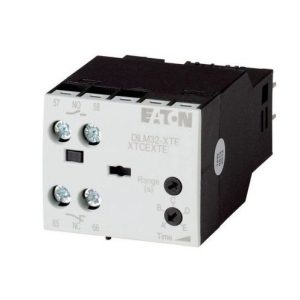
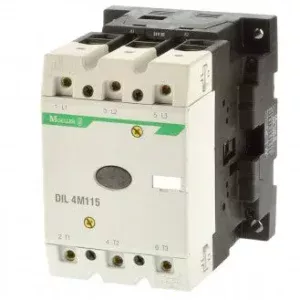
Restocking Is a Different Decision From First Ordering A first order is a test: one frame, one coil, one reference, sent to establish whether the supplier ships what they say. Restocking is a different calculation. It asks how much of a frame to hold so that the next panel builder’s order ships same day, and […]
Certification Is a Market Question, Not a Product Question The same contactor can be perfectly legal in one market and unsellable in another, because the certification requirement follows the destination rather than the product. A buyer importing into the European Union needs CE-RED and RoHS documentation for the EU; the same unit into Australia needs […]
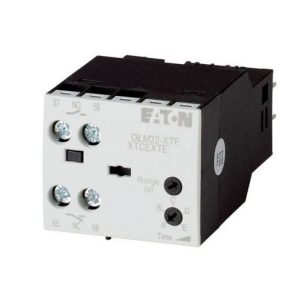
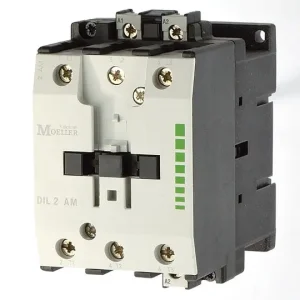
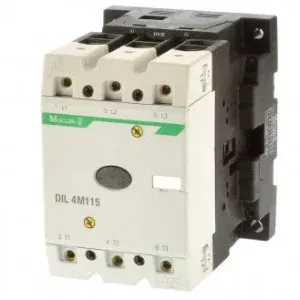
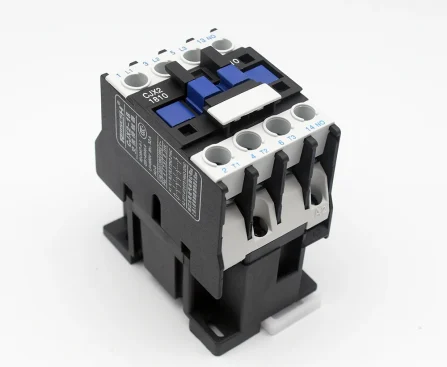
What a Cross-Reference Is and Is Not A cross-reference table tells you which part number corresponds to which. It does not tell you whether the part is a substitute. Those are different questions, and conflating them is how a substitution arrives at a panel builder’s bench with the wrong auxiliary contact count. Frame-Level Correspondence DILM […]
When Private Label Pays on a Component A contactor is not a branded product at the panel builder’s bench. Nobody asks whose contactor is in the panel. What a distributor does brand — the carton, the label, the reference — matters only where the buying decision is made, and for most distributors that is the […]
The Symptom That Suggests a Coil Problem A contactor whose main contacts are pitted, whose mechanism is stiff, or whose aux blocks are cracked has failed. A contactor that pulls in weakly, hums, or drops out on a healthy power supply usually has a coil problem — and a coil problem is a very different […]
Why QC Documentation Decides the Supplier A contactor is a component that fails inside a control panel, usually during commissioning and occasionally during operation. The failure is expensive not because the part is dear but because the panel has to be opened, diagnosed and possibly rebuilt. That is why the documentation accompanying a batch matters […]
Why Substitution Is a Specification Exercise, Not a Price Exercise Panel builders re-source contactors for one of three reasons: lead time, price, or continuity of supply. Lead time and price are commercial. Continuity of supply is a specification question, because a substitute that fails to match the incumbent on any of five parameters will stop […]
Coil Voltage Follows the Control Supply, Not the Load This is the single most consequential specification in a contactor order, and the most frequently assumed. The coil voltage is determined by the control circuit that energises the contactor, not by the load it switches. A contactor switching a 400V three-phase motor may have a 24VDC […]
Frame Size Is Not the Rating The most common misunderstanding in contactor procurement is treating the frame number as a current rating. DILM9 is a frame size, not 9 amps of usable capacity. The usable capacity depends on the AC rating, the number of poles, the ambient temperature, the mounting arrangement and the number of […]
Reading the Designation One More Time DILM25-10: 25A frame, 10A AC-3 rating, with a 230V AC coil in the base designation. This is the mainstream 230V single-phase-supply frame in European panel work, and it is the version most often specified when an incumbent brand is being re-sourced for price. The variables that decide whether an […]