Why a Custom Remote Is Rarely the Right Answer Most buyers who approach a manufacturer about a custom remote have a problem that a catalogue product already solves. The genuine reasons for going custom are specific: a receiver family nobody else supports, a housing that must fit a particular panel, a protocol that has to […]

The Price Gap Is Usually Design, Not Margin When two quotations for the same class of remote differ by forty percent, the instinct is to assume the cheaper one is a trading company taking a margin. Sometimes it is. More often, the difference is in the design, and the cheaper unit is genuinely a less […]
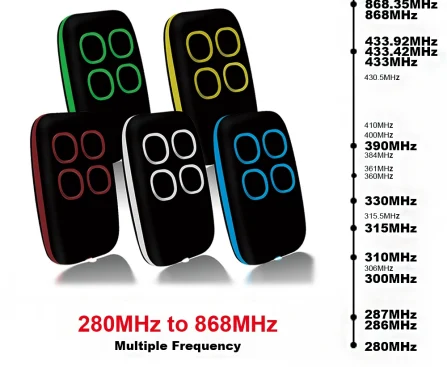
Why Multi-Band Is a Manufacturing Problem Before It Is a Radio Problem Adding a second band to a remote means adding a second oscillator, a second filter, a second matching network and a switch between them. Adding a fourth means the antenna system has to work across four very different frequencies with one physical structure, […]
The Complaint That Is Not a Defect “My remote stopped working” is the single most common remote-related report in this industry, and a large share of those units are not faulty at all. They are batteries that read fine at rest and fail the moment the transmit current hits them. The remote was never the […]
Where Range Actually Comes From An RF product has two antennas: one in the transmitter, one in the receiver. Both are matched to the board layout by component values chosen during design, and both are affected by what surrounds them. In a plastic housing, the plastic is part of the antenna system — which means […]
The First Thing a Customer Judges A customer holding a remote for the first time forms an opinion in about two seconds, and that opinion is about the button, not the radio. The radio is invisible until it works or does not. The button is judged immediately: does it feel solid, does it travel far […]
The Mould Is the Longest-Lived Part of the Product A remote’s electronic design can be revised in months. The housing tooling outlives every product it was made for — five years, ten, sometimes longer. It is also the single largest one-off cost in bringing a new remote to market, and the reason a private-label programme […]
What Rolling Code Actually Does A fixed-code remote transmits the same value every time. The receiver accepts it, which is convenient and insecure. A rolling-code remote transmits a different value on every press, and the receiver accepts it only if it falls within a window of recently accepted codes. That single mechanism is why a […]
Four Blocks, and Only One of Them Is Obvious When a buyer asks what makes one remote better than another, the answer usually offered is the transmit power. It is the least useful of the four things that determine whether a remote works, and it is the only one that is measured on the packaging. […]
Why a Supplier Who Listens Is Worth More Than One Who Is Cheap Price is a number you can compare across three quotes. It is also the number that will be beaten, because somebody is always cheaper. What a supplier does with the information you give them after the invoice is the thing that cannot […]