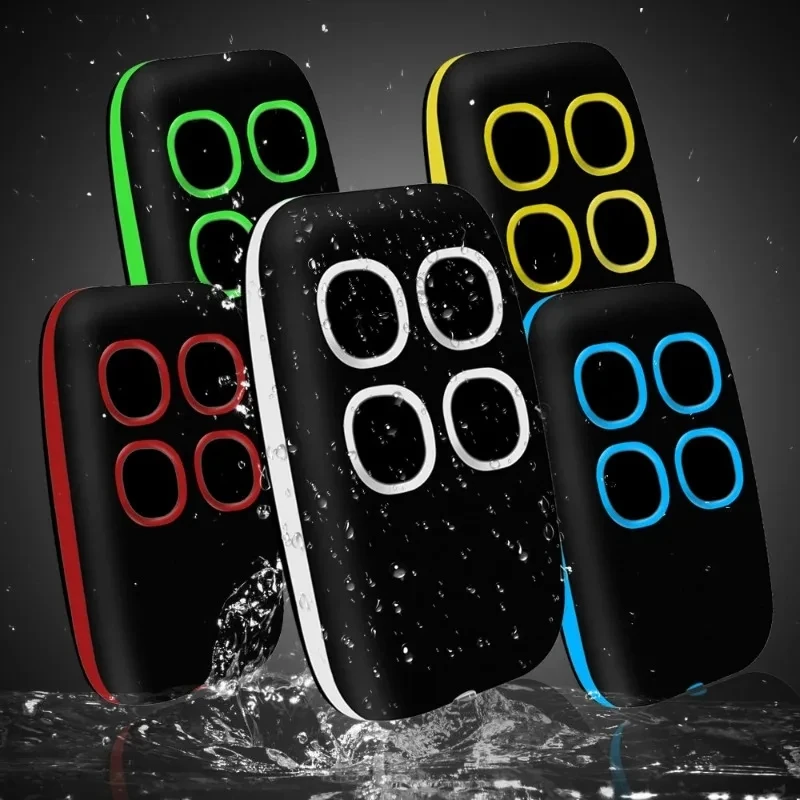

Four Blocks, and Only One of Them Is Obvious
When a buyer asks what makes one remote better than another, the answer usually offered is the transmit power. It is the least useful of the four things that determine whether a remote works, and it is the only one that is measured on the packaging.
An RF remote is four blocks in series: the code source, the modulator, the RF output stage, and the antenna system. A failure anywhere in that chain produces the same symptom — the customer says the remote does not work — and each block has a different root cause.
The Four Blocks
| Block | What it is | What it determines | Note |
|---|---|---|---|
| Code source | The rolling-code IC or MCU generating the code sequence | Algorithm, code table, and the learning behaviour | A dedicated IC is more predictable and easier to certify |
| Modulator | Converts the code into a modulated carrier | OOK, FSK or ASK, and the pulse parameters | FSK tolerates noise better, which matters near motor drives |
| Output stage | The power amplifier driving the antenna | Transmit power and, critically, the peak current | Current draw is set here, and it sets the battery life |
| Antenna system | The radiating element and its matching network | Radiation pattern, efficiency and tolerance to detuning | Where most of the real-world range actually comes from |
Why Transmit Power Alone Is a Marketing Number
Transmit power is what the transmitter delivers into the antenna under matched conditions. What the receiver actually sees depends on the antenna system, the distance, the orientation, the environment and the receiver’s own sensitivity. A remote with an unmatched antenna and a mediocre transmit stage can be beaten by a modest one with a properly matched antenna in the real installation.
The practical consequence: a range complaint is a system problem, and the right question to ask is not “how many milliwatts” but “what is the antenna match and how was range tested”.
A range figure quoted without the antenna, the frequency and the test geometry is not a specification. It is a number.
Where the Design Decisions Actually Go
- Code source: a dedicated code IC is more predictable than an MCU-generated waveform, and it is easier to qualify for certification.
- Modulator: OOK and FSK are both common; FSK is more tolerant of noise and interference, which matters in an environment with motor inverters and LED drivers.
- Output stage: a low-power stage preserves battery life, which is the real constraint in a handheld that sits in a glovebox for two years.
- Antenna: this is where most of the range performance actually comes from, and it is the part most often compromised to save a fraction of a cent.
Request a Quotation — RF Transmit Path
Send the band, the code system and the quantity you need. We reply with the exact part number, EXW price, MOQ and lead time. MOQ 100 pcs per SKU.
Send Inquiry on WhatsAppEmail: Joanna@rfmando.com · MOQ 100 pcs per SKU · 1 free sample per SKU ($30 DHL, buyer pays) · Lead time 7-15 days · T/T 30/70 · EXW Xiamen
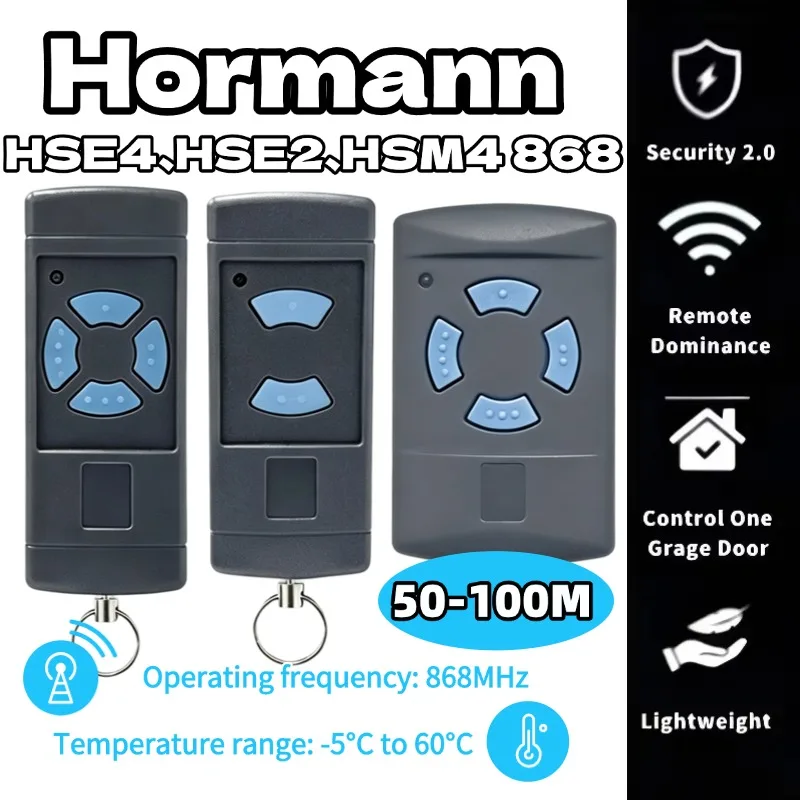
Catalogue references for the specification above: 280-868MHz multi-frequency garage remote duplicator and TY200 4-band 280-868 MHz multi-frequency cloner. All are MOQ 100 pcs per SKU, with a 7-15 day lead time and one free sample per SKU ($30 DHL, buyer pays). They are supplied on our own PCBA and housing tooling.
Where to Order
Terms
MOQ 100 pcs per SKU. One free sample per SKU ($30 DHL, buyer pays). Lead time 7-15 days. Payment T/T 30/70. Prices EXW Xiamen. 100% functional test on every unit; a third-party QC report at AQL 5% is available on request. CE-RED, RoHS and FCC Part 15 documentation; RCM available.