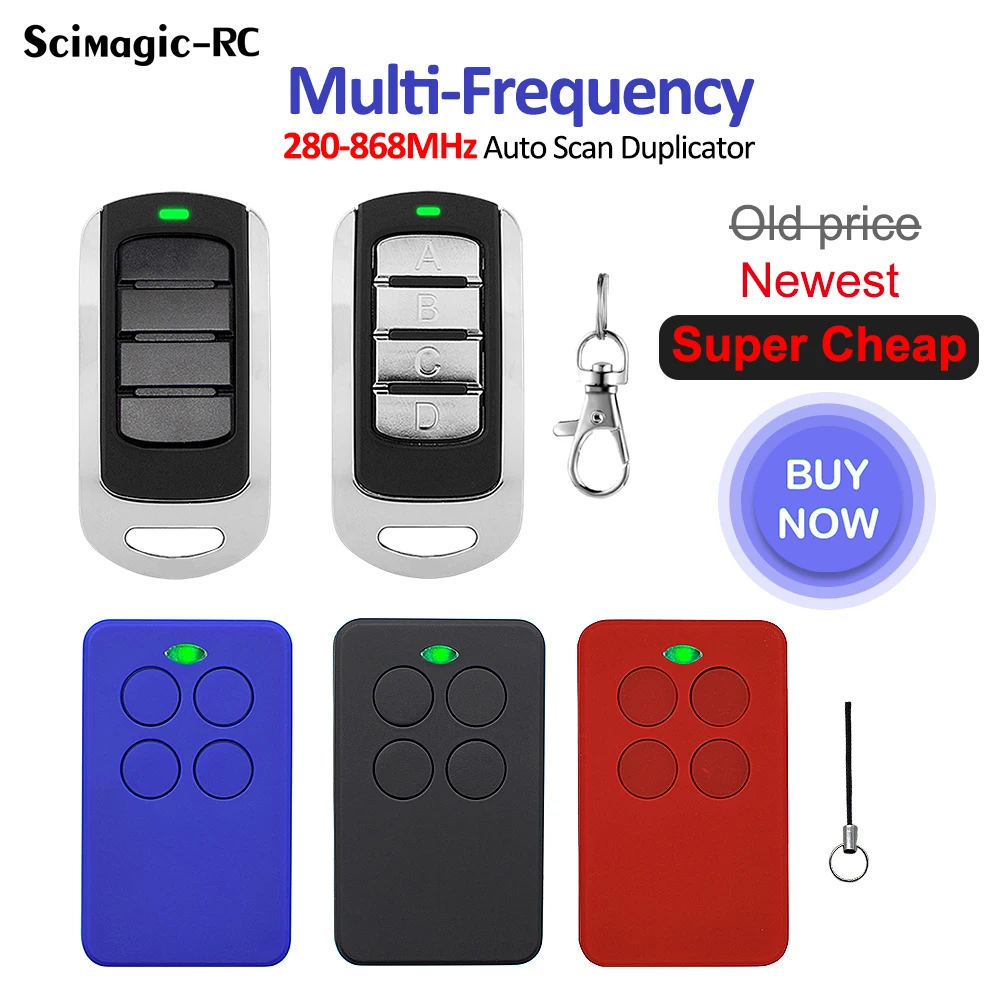

Why Multi-Band Is a Manufacturing Problem Before It Is a Radio Problem
Adding a second band to a remote means adding a second oscillator, a second filter, a second matching network and a switch between them. Adding a fourth means the antenna system has to work across four very different frequencies with one physical structure, and the housing has to fit a four-band antenna without the band switching degrading any of them.
That last constraint is what makes multi-band production harder than the radio design suggests.
What Each Band Adds
| Band group | Where it applies | Production consequence | Note |
|---|---|---|---|
| 280-315MHz | Low-band legacy, mainly North American | One oscillator, one filter, one match | Adding it costs a switch and an antenna compromise |
| 330-350MHz | Niche European legacy | Same structure as the other low band | Frequently a variant rather than a new design |
| 365-390MHz | North American mid-range | Matched separately from 315MHz | The most common single-band product in that market |
| 433-868MHz | Europe and Australia | The widest span, and the hardest to match | Usually split internally into sub-bands |
Why Antenna Design Is the Hardest Part
The four bands span roughly 280MHz to 868MHz. A single antenna structure that is efficient at 315MHz is close to a short stub at 868MHz, which means a wideband solution is a compromise across the range. Adding a band costs antenna performance on the others, which is why multi-band products vary so much between suppliers who quote the same band list.
The second factor is the switch. Every band change is a discontinuity in the RF path, and each discontinuity costs insertion loss. A well-designed switching network preserves the match across all four bands; a poorly designed one costs a band or two of effective range.
Two multi-band units quoting the same four bands can differ by a factor of two in real-world range, because the band list does not describe the antenna or the switching.
The Fixed-Code Side Is a Different Discipline
The RF side of a cloner is a receiver plus a transmitter. The code side is a table of code families and the learning logic that decides which one to emit. A cloner that lists four bands but supports only two code families will not pair with two of the most common legacy systems, and the technician will conclude the tool is faulty.
For a dealer, this means the fixed-code family list is the specification that matters, and it is the one that is most often omitted from the marketing.
What to Ask Before Ordering
- The band list, with the sub-bands stated rather than a marketing range.
- The fixed-code family list, in writing.
- Whether learning works without a PC, which a technician needs on site.
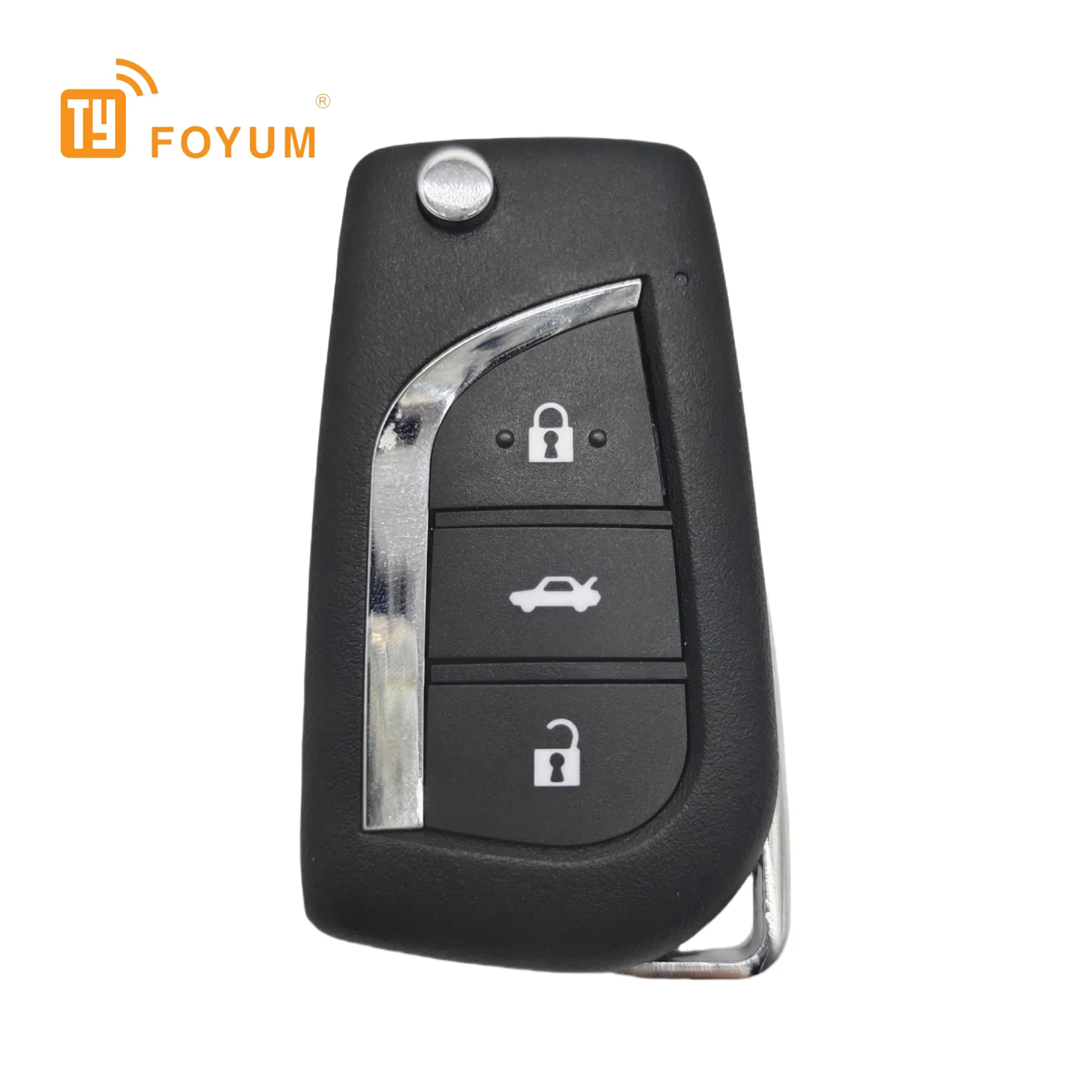
- Whether the case and car-key roll-up format are included in the market you are buying for.
Request a Quotation — Multi-Band Cloner Production
Send the band, the code system and the quantity you need. We reply with the exact part number, EXW price, MOQ and lead time. MOQ 100 pcs per SKU.
Send Inquiry on WhatsAppEmail: Joanna@rfmando.com · MOQ 100 pcs per SKU · 1 free sample per SKU ($30 DHL, buyer pays) · Lead time 7-15 days · T/T 30/70 · EXW Xiamen
Catalogue references for the specification above: 280-868MHz multi-frequency garage remote duplicator and TY200 4-band 280-868 MHz multi-frequency cloner. All are MOQ 100 pcs per SKU, with a 7-15 day lead time and one free sample per SKU ($30 DHL, buyer pays). They are supplied on our own PCBA and housing tooling.
Where to Order
Terms
MOQ 100 pcs per SKU. One free sample per SKU ($30 DHL, buyer pays). Lead time 7-15 days. Payment T/T 30/70. Prices EXW Xiamen. 100% functional test on every unit; a third-party QC report at AQL 5% is available on request. CE-RED, RoHS and FCC Part 15 documentation; RCM available.