
Why a Supplier Who Listens Is Worth More Than One Who Is Cheap
Price is a number you can compare across three quotes. It is also the number that will be beaten, because somebody is always cheaper. What a supplier does with the information you give them after the invoice is the thing that cannot be compared, and in practice it is what determines whether the second order happens at all.
How a Field Report Becomes a Change
| Step | What happens | Note |
|---|---|---|
| 1. Report | Date code, symptom, photos, and the receiver or vehicle involved | Without a date code the case cannot be traced |
| 2. Triage | Manufacturing defect, application issue, or specification error | Not every complaint is a defect, and saying so is useful |
| 3. Batch analysis | Other units from the same run, and the component lots used | Determines whether this is an isolated case or a run issue |
| 4. Root cause | Component, process, documentation or genuinely no cause found | A conclusion is a conclusion, even an uncomfortable one |
| 5. Corrective action | Component spec change, process change, new test point, or documentation change | A new test point stops the third occurrence |
| 6. Feedback to the buyer | What was found, what changes, and whether other stock is affected | Closure, with an answer rather than a silence |
What We Do Not Do With a Complaint
We do not treat every complaint as a defect. A significant share of what arrives is not a manufacturing fault at all: a battery failing under load, a receiver memory limit, an installation mistake, a customer who ordered the wrong band for their market. Those need a different answer, and giving them a replacement would be dishonest and would hide the real problem.
So the first step is always diagnosis, and the diagnosis sometimes ends with us telling you that it is not our fault. That answer is more useful than a credit, because it stops the same issue being investigated twice.
A supplier who credits every complaint is not being generous. They are telling you they have not found the cause.
What Changes as a Result
- Component specification — a reference that produces intermittent range complaints gets a better reference oscillator.
- Housing geometry — button-pad feedback from technicians leads to a revised pad retention.
- Labelling and documentation — repeated pairing confusion leads to a clearer procedure sheet, which reduces your support calls as well as ours.
- Test coverage — a failure mode that appears twice becomes a new test point, so it does not appear a third time.
Send us the awkward ones. The complaint that is inconvenient to write up is usually the one that reveals a real defect, and it is the one that most improves the product for every other customer as well.
Request a Quotation — Continuous Improvement
Send the product line and target market. We reply with a written EXW quotation, MOQ, lead time, a sample offer and the QC documentation that ships with the batch. MOQ 100 pcs per SKU.
Send Inquiry on WhatsAppEmail: Joanna@rfmando.com · MOQ 100 pcs per SKU · 1 free sample per SKU ($30 DHL, buyer pays) · Lead time 7-15 days · T/T 30/70 · EXW Xiamen
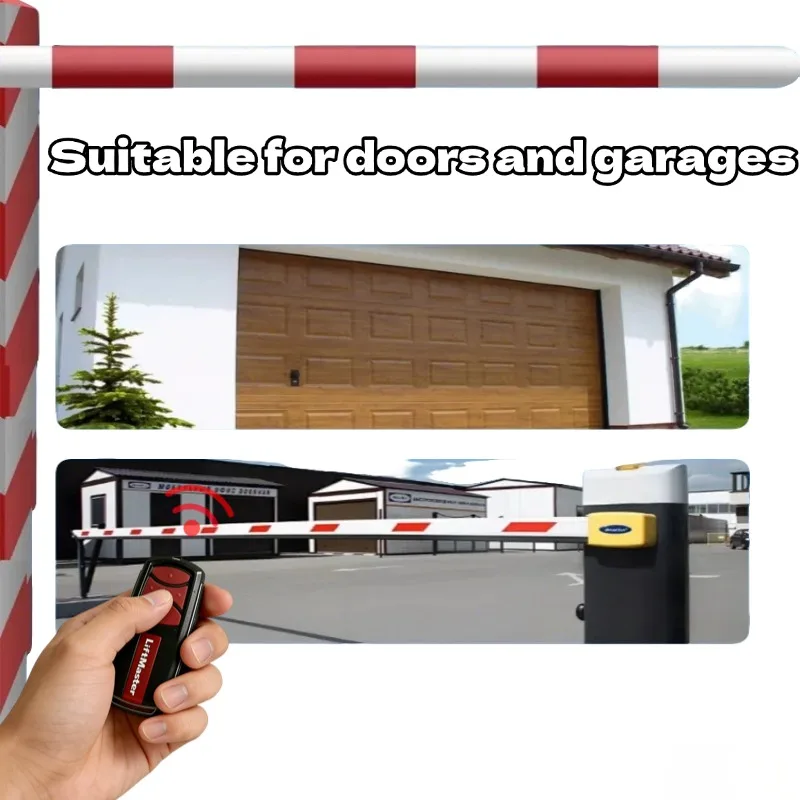
Catalogue references for the specification above: TY200 4-band 280-868 MHz multi-frequency cloner and ME960-LM 433.92MHz keychain transmitter. Both are MOQ 100 pcs per SKU, with a 7-15 day lead time and one free sample per SKU. They are supplied on our own PCBA and housing tooling.
Terms
MOQ 100 pcs per SKU. One free sample per SKU ($30 DHL, buyer pays). Lead time 7-15 days. Payment T/T 30/70. Prices EXW Xiamen. 100% functional test on every unit; a third-party QC report at AQL 5% is available on request. CE-RED, RoHS and FCC Part 15 documentation; RCM available.