
What Rolling Code Actually Does
A fixed-code remote transmits the same value every time. The receiver accepts it, which is convenient and insecure. A rolling-code remote transmits a different value on every press, and the receiver accepts it only if it falls within a window of recently accepted codes. That single mechanism is why a copied rolling code is useless, and it is the entire security argument for the format.
The Handshake, Step by Step
| Step | What happens | Why it matters |
|---|---|---|
| 1. Press | The button closes a dome switch and the code source starts | Mechanical and electrical initiation |
| 2. Key generation | The code source derives a new value from its internal state | The newness that makes a replay useless |
| 3. Modulation | The code is applied to the carrier as a modulated waveform | The format the receiver expects |
| 4. Transmission | The output stage drives the antenna through the match | Signal integrity at the receiver |
| 5. Receiver validation | The receiver checks the code against its window of recent values | Accept, or reject as a replay |
| 6. Learning mode | A separate sequence writes the new code into the receiver memory | How the handset is paired in the first place |
| 7. Window management | The receiver advances its window and eventually forgets old codes | Why a dormant handset needs re-pairing |
What Determines Whether a Replacement Is Compatible
Three things, and all three must match: the algorithm family, the code table, and the transmission format. A remote that uses the right algorithm with the wrong table produces a valid-looking signal that the receiver ignores, which from the customer’s side is a dead remote and from the installer’s side is a return.
| Layer | What it determines | Common mismatch |
|---|---|---|
| Algorithm | How the code is generated | Right family, wrong implementation |
| Code table | Which codes the receiver expects | Same algorithm, different market table |
| Transmission format | Modulation, pulse width, preamble | Looks identical, will not pair |
Why the Same Brand Ships Different Handlers
Manufacturers do not use one code table worldwide. Each market has its own allocation, its own table and sometimes its own transmission format under the same model number. That is why “the same model” can pair in Germany and fail in Italy, and why a supplier who cannot name the code table for your market is guessing.
A rolling-code handset is manufactured to a protocol. It is never captured from another handset, which is exactly why the aftermarket for it exists.
Request a Quotation — Rolling-Code Implementation
Send the band, the code system and the quantity you need. We reply with the exact part number, EXW price, MOQ and lead time. MOQ 100 pcs per SKU.
Send Inquiry on WhatsAppEmail: Joanna@rfmando.com · MOQ 100 pcs per SKU · 1 free sample per SKU ($30 DHL, buyer pays) · Lead time 7-15 days · T/T 30/70 · EXW Xiamen
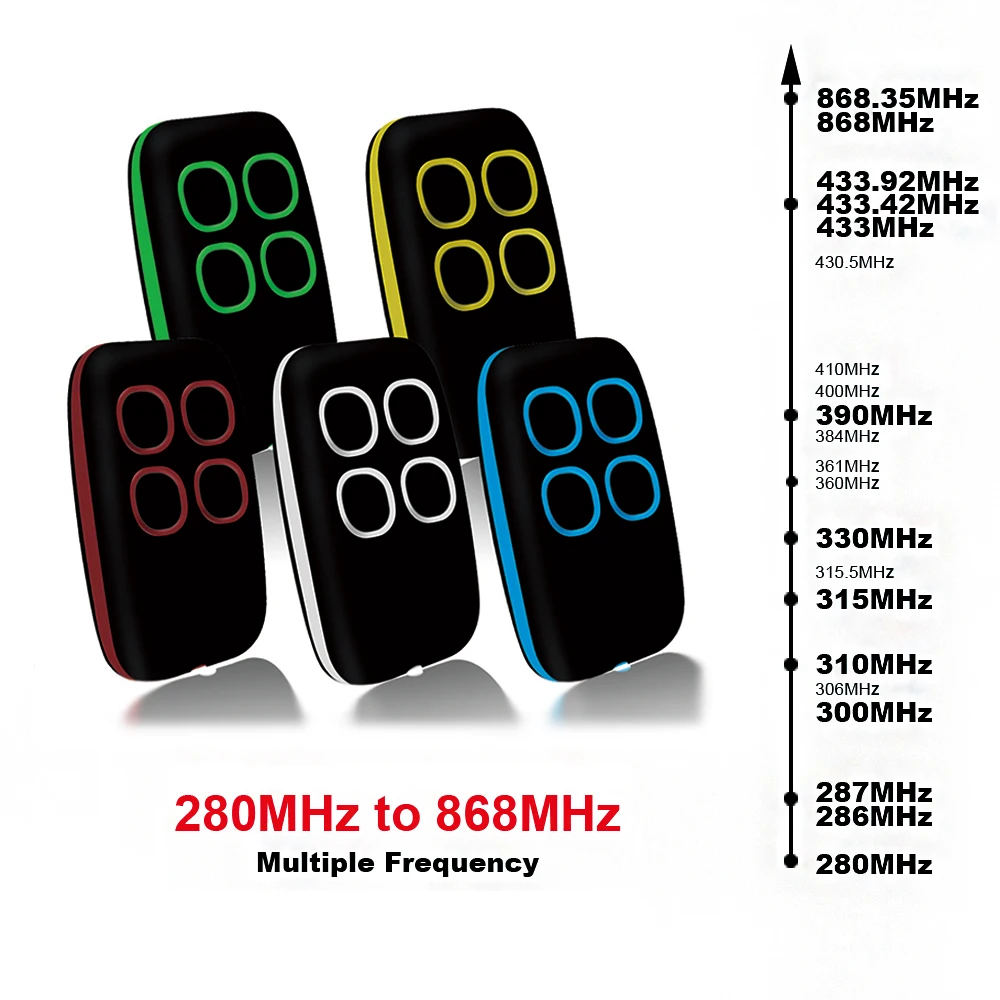
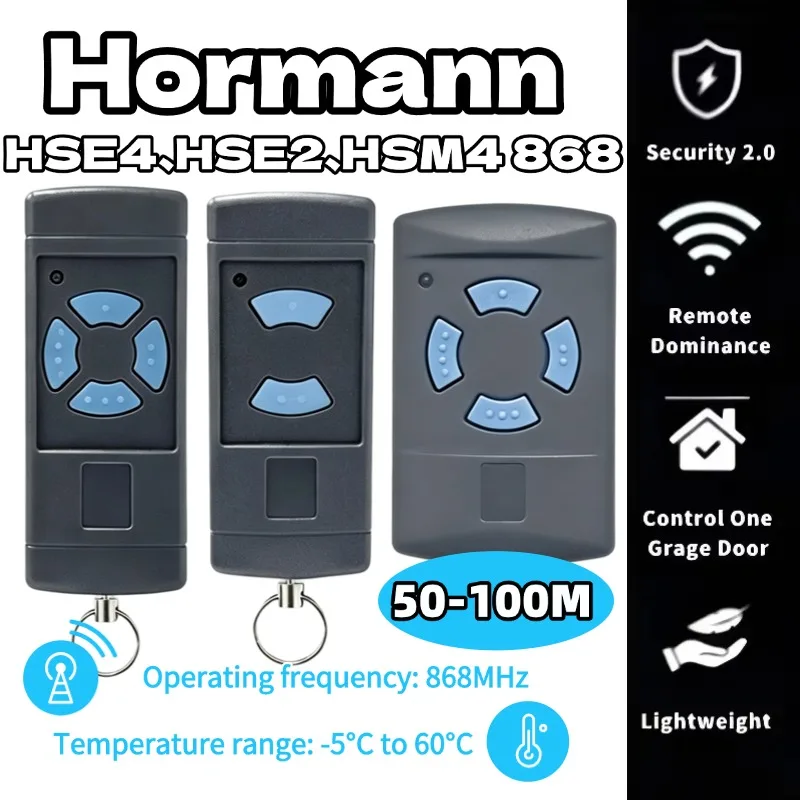
Catalogue references for the specification above: TY200 4-band 280-868 MHz multi-frequency cloner and HORMANN 868MHz rolling-code garage door remote. All are MOQ 100 pcs per SKU, with a 7-15 day lead time and one free sample per SKU ($30 DHL, buyer pays). They are supplied on our own PCBA and housing tooling.
Where to Order
Terms
MOQ 100 pcs per SKU. One free sample per SKU ($30 DHL, buyer pays). Lead time 7-15 days. Payment T/T 30/70. Prices EXW Xiamen. 100% functional test on every unit; a third-party QC report at AQL 5% is available on request. CE-RED, RoHS and FCC Part 15 documentation; RCM available.