
The First Thing a Customer Judges
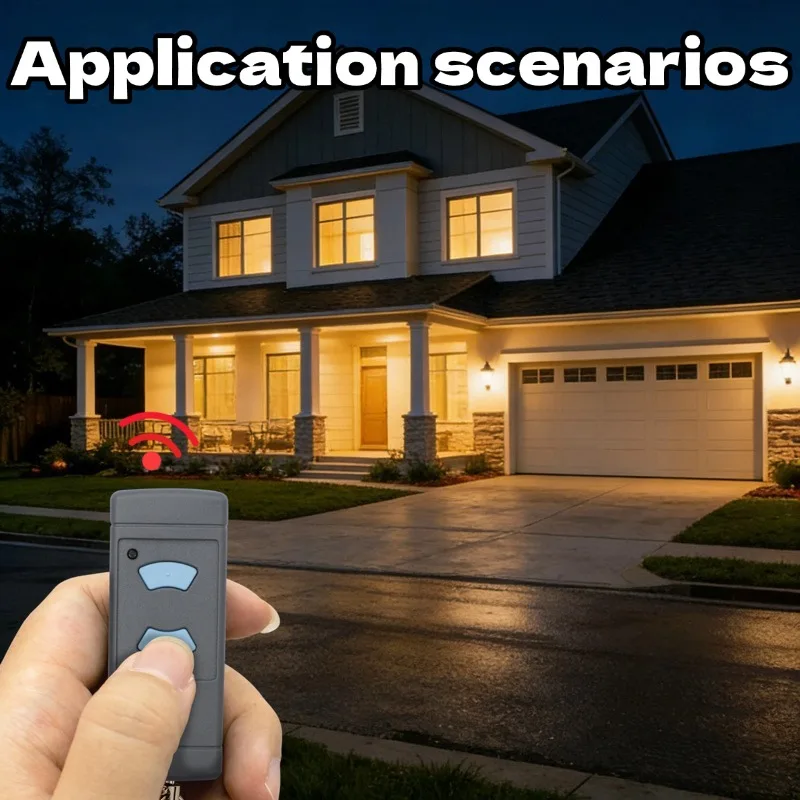
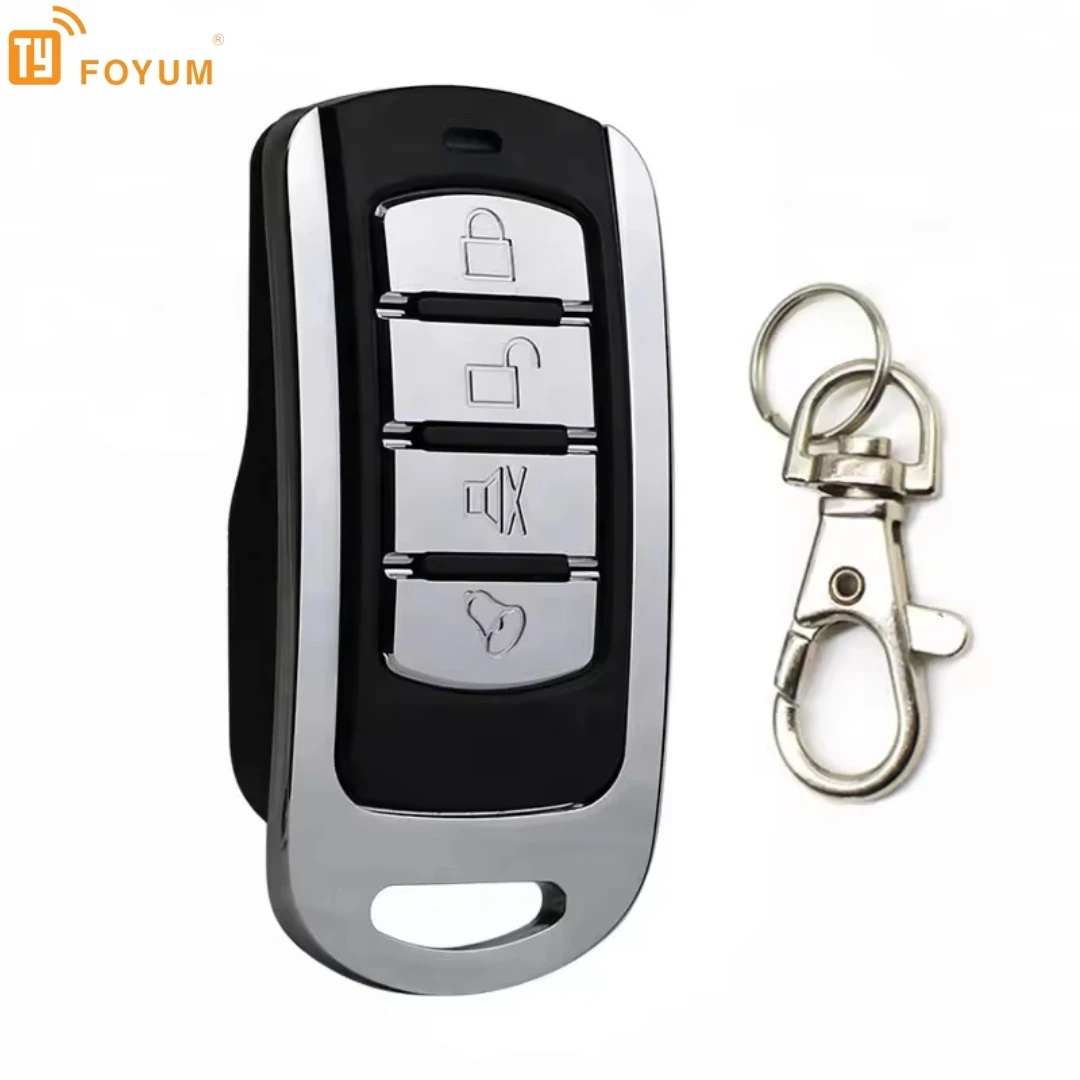
A customer holding a remote for the first time forms an opinion in about two seconds, and that opinion is about the button, not the radio. The radio is invisible until it works or does not. The button is judged immediately: does it feel solid, does it travel far enough, does it feel like it clicks, and is the pad still aligned after a year of a keyring rubbing against it.
What Determines the Feel
| Parameter | What it is | What it controls | Note |
|---|---|---|---|
| Dome stiffness | The metal dome that closes the circuit | Click feel and the force needed | Too soft feels mushy, too stiff feels rigid |
| Dome height | Gap between the dome and the PCB | Travel and the point at which contact occurs | Sets how much give the finger feels |
| Pad retention | How the silicone pad stays on the housing | Whether the button survives a keyring | Moulded-in beats glued |
| Travel consistency | Tolerance between dome, pad and housing | Whether every button feels the same | A tolerance stack, not a single part |
| Sealing | How the pad meets the housing edge | Water and dust ingress over time | Affects the IP rating claim |
The Failure Modes, in Order of Frequency
| Failure | What the customer experiences | Cause |
|---|---|---|
| Pad lift | Button has to be pressed hard, or presses intermittently | Adhesive failure, or a pad sized tight for the housing |
| Travel inconsistency | One button is harder than the others | Tolerance stack-up between the dome and the housing |
| Mushy feel | Presses feel soft, no click | Dome stiffness or dome height outside spec |
| Rigid feel | Feels cheap, clicks but no give | Housing wall too stiff, no dome compliance |
Why This Is a Returns Issue, Not a Preference Issue
A customer who finds the buttons mushy concludes the remote is faulty, because the button is the only part of the product they can evaluate. They return it, and the return is charged to a manufacturing defect even though the electronics are perfect. At keyfob scale, where the pad is a separate insert in a tight cavity, the tolerance stack is far less forgiving than in a full-size handheld.
At keyfob scale, fit and button feel decide the returns. A handheld can hide a mediocre housing; a keyfob cannot.
What to Specify
- Moulded-in versus glued pad — moulded-in fails far less often and is the right answer for a keyring product.
- Travel and force figures on the drawing, not “good feel”.
- A wear-cycle test on the pad and the dome, not only on the electronics.
- A drop test after the wear test, because a worn pad and an impact are the two most common failure combinations in a keyring product.
Request a Quotation — Button Pad Mechanics
Send the band, the code system and the quantity you need. We reply with the exact part number, EXW price, MOQ and lead time. MOQ 100 pcs per SKU.
Send Inquiry on WhatsAppEmail: Joanna@rfmando.com · MOQ 100 pcs per SKU · 1 free sample per SKU ($30 DHL, buyer pays) · Lead time 7-15 days · T/T 30/70 · EXW Xiamen
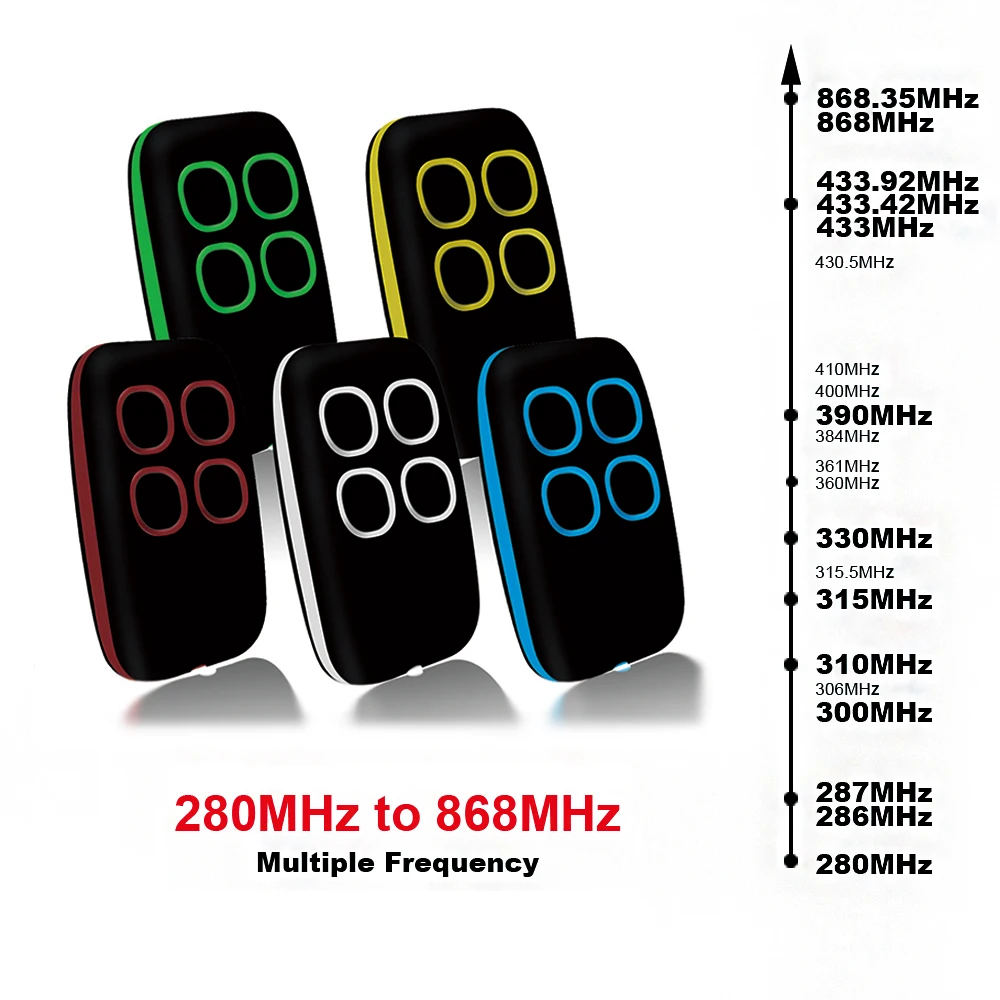
Catalogue references for the specification above: HORMANN 868MHz rolling-code garage door remote and TY200 4-band 280-868 MHz multi-frequency cloner. All are MOQ 100 pcs per SKU, with a 7-15 day lead time and one free sample per SKU ($30 DHL, buyer pays). They are supplied on our own PCBA and housing tooling.
Where to Order
Terms
MOQ 100 pcs per SKU. One free sample per SKU ($30 DHL, buyer pays). Lead time 7-15 days. Payment T/T 30/70. Prices EXW Xiamen. 100% functional test on every unit; a third-party QC report at AQL 5% is available on request. CE-RED, RoHS and FCC Part 15 documentation; RCM available.