Data Work Is Invisible Until It Is Expensive
A catalogue with inconsistent naming looks untidy but costs nothing on day one. The cost arrives later, as the practical inability to answer simple questions: how many of this model are in stock, which units cover the 433.92 MHz band, which ones were affected by the last housing revision. None of those are analytics problems. They are consequences of how the data was entered.
The Three Fields That Must Be Authoritative
| Field | What it holds | Rule |
|---|---|---|
| SKU | Internal, unique, never changes | The key everything else hangs on |
| Original model reference | The model it is compatible with or a replacement for | Never unique across brands |
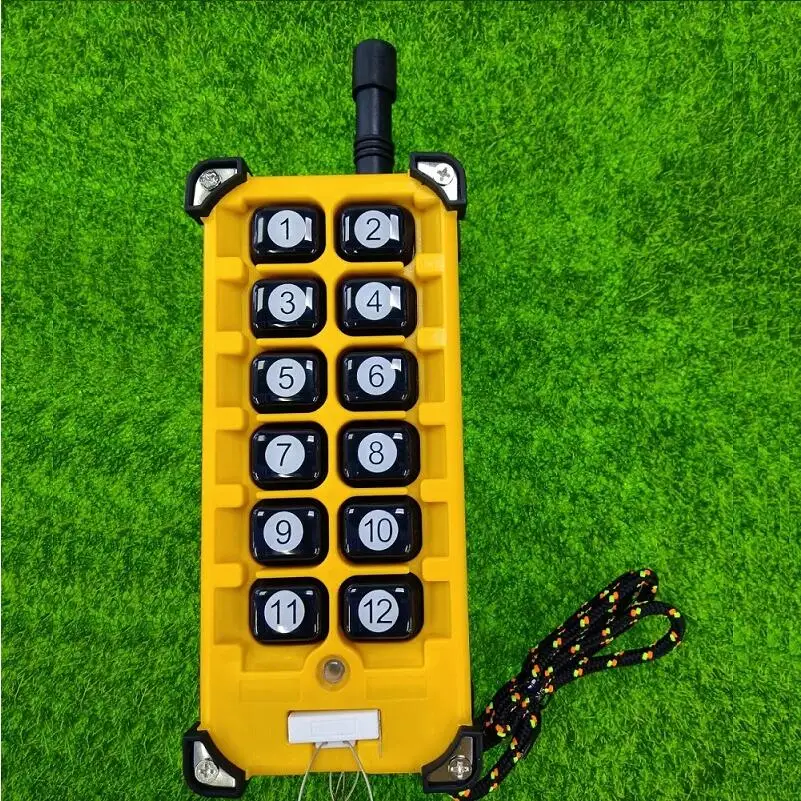
| Frequency band | The single most-asked filter | Must be present on every unit |
| Code table / protocol | Determines whether it pairs | Must be present on every unit |
| Stock status | In stock, backorder, made to order | Must be a real commitment |
| MOQ | Per SKU | States the commercial minimum |
Why Model Numbers Are Not Unique Across Brands
The same model number is used by different manufacturers for completely different products. The same manufacturer uses the same model number for different products in different markets. This is not a defect in the data; it is the reality of the industry, and it is precisely why a replacement remote is described as compatible with or a replacement for a named model rather than being the model itself.
The practical consequence for catalogue management is that a SKU cannot be derived from the original model number. It has to be an internal identifier that carries the compatibility information separately, so that two different replacement products for the same original model remain distinguishable in the data even though they share the original’s name in the title.
A Naming Convention That Survives Contact With Reality
| Component | Purpose | Rule |
|---|---|---|
| Gemu internal SKU | Unique, stable, never reused | Owns the record |
| Original model | Compatibility reference only | Descriptive, never the key |
| Band + code table | Technical filter attributes | Structured fields, not free text |
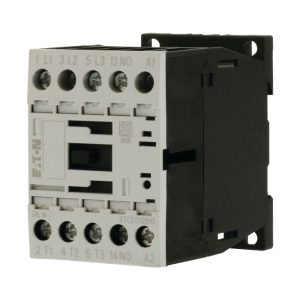
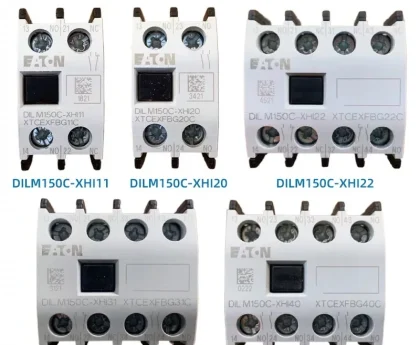
| Voltage / current rating | Electrical compatibility | Mandatory for contactor lines |
Checking Data Quality Before It Reaches the Customer
- Every product must have a band. A product without a frequency band cannot be filtered by the one question every buyer asks first.
- Every product must have a code table. Not “rolling code” as a vague label, but the actual table or protocol family, because that is what determines whether it pairs.
- Every product must have a stock status that means something. “Backorder” and “made to order” are different commitments to a buyer.
- Every product must state MOQ. A B2B buyer who has to ask for the MOQ is a buyer who has to ask for the price too.
- Price must be stated or the enquiry path must be explicit. A price of zero with no quote CTA is worse than no price at all, because it reads as a mistake.
Catalogue data discipline is not admin work. It is the difference between a distributor reordering and a distributor re-quoting from scratch.
Request a Quotation — SKU Data Discipline
Send the model number, the band and the annual quantity. We reply with the exact part number, EXW price, MOQ and lead time. MOQ 100 pcs per SKU.
Send Inquiry on WhatsAppEmail: Joanna@rfmando.com · MOQ 100 pcs per SKU · 1 free sample per SKU ($30 DHL, buyer pays) · Lead time 7-15 days · T/T 30/70 · EXW Xiamen
Terms
MOQ 100 pcs per SKU. One free sample per SKU ($30 DHL, buyer pays). Lead time 7-15 days. Payment T/T 30/70. Prices EXW Xiamen. 100% functional test on every unit; a third-party QC report at AQL 5% is available on request. CE-RED, RoHS and FCC Part 15 documentation; RCM available.