
Three Ways to Sell the Same Box
Remote distribution runs through three channels, and the margin, the risk and the operational load differ enough that a dealer’s choice is a business decision rather than a preference. Understanding which one you are actually in makes the buying decisions clearer.
Channel Comparison
| Parameter | Wholesale to a dealer | Dropship from the factory | Direct import |
|---|---|---|---|
| Who buys from you | Another dealer or a retailer | The end customer | The end customer |
| Margin layer | One | Two | Two, but you own the import |
| Stock you carry | Yes | Usually none | Yes |
| You handle | Stock, credit, delivery | Nothing — the supplier ships direct | Freight, clearance, classification, compliance |
| Customer relationship | With the dealer | With the supplier | With you |
| Best at | Volume, steady reorder | Low volume, no stock risk | High volume, steady demand |
Where the Margin Actually Sits
Wholesale-to-retail: the dealer adds one margin layer and carries the stock risk. Dropship: the dealer adds margin without carrying stock, but gives up control of the customer experience and cannot answer a technical question at the counter. Direct import: the dealer removes both layers and takes on the freight, the clearance, the classification and the compliance work.
Direct import is worth it when the volume is steady enough to amortise the fixed costs and the dealer has someone who can do the paperwork. At low volume, a wholesale partner is cheaper even after their margin, because the fixed cost of an import — clearance, classification, storage, the occasional hold — does not shrink.
The Question That Decides It
The import case is arithmetic, not ambition: monthly units × margin per unit must exceed the landed cost of a stock run plus the fixed cost of doing the import once.
What Changes When You Import Directly
- MOQ becomes your working capital. MOQ 100 pcs per SKU is deliberately low enough that a new importer can hold depth across several references rather than depth in one.
- Lead time becomes your stock buffer. Seven to fifteen days from existing tooling, and a mixed-SKU carton is normal — ask for the packing list broken out by reference.
- Traceability becomes your defence. Batch date codes and a third-party report at AQL 5% on the first order are what make a field question resolvable.
Request a Quotation — Channel Economics for Remotes
Send the brands and models you meet most in your market. We reply with the band, the code system and the exact part numbers before you order. MOQ 100 pcs per SKU.
Send Inquiry on WhatsAppEmail: Joanna@rfmando.com · MOQ 100 pcs per SKU · 1 free sample per SKU ($30 DHL, buyer pays) · Lead time 7-15 days · T/T 30/70 · EXW Xiamen
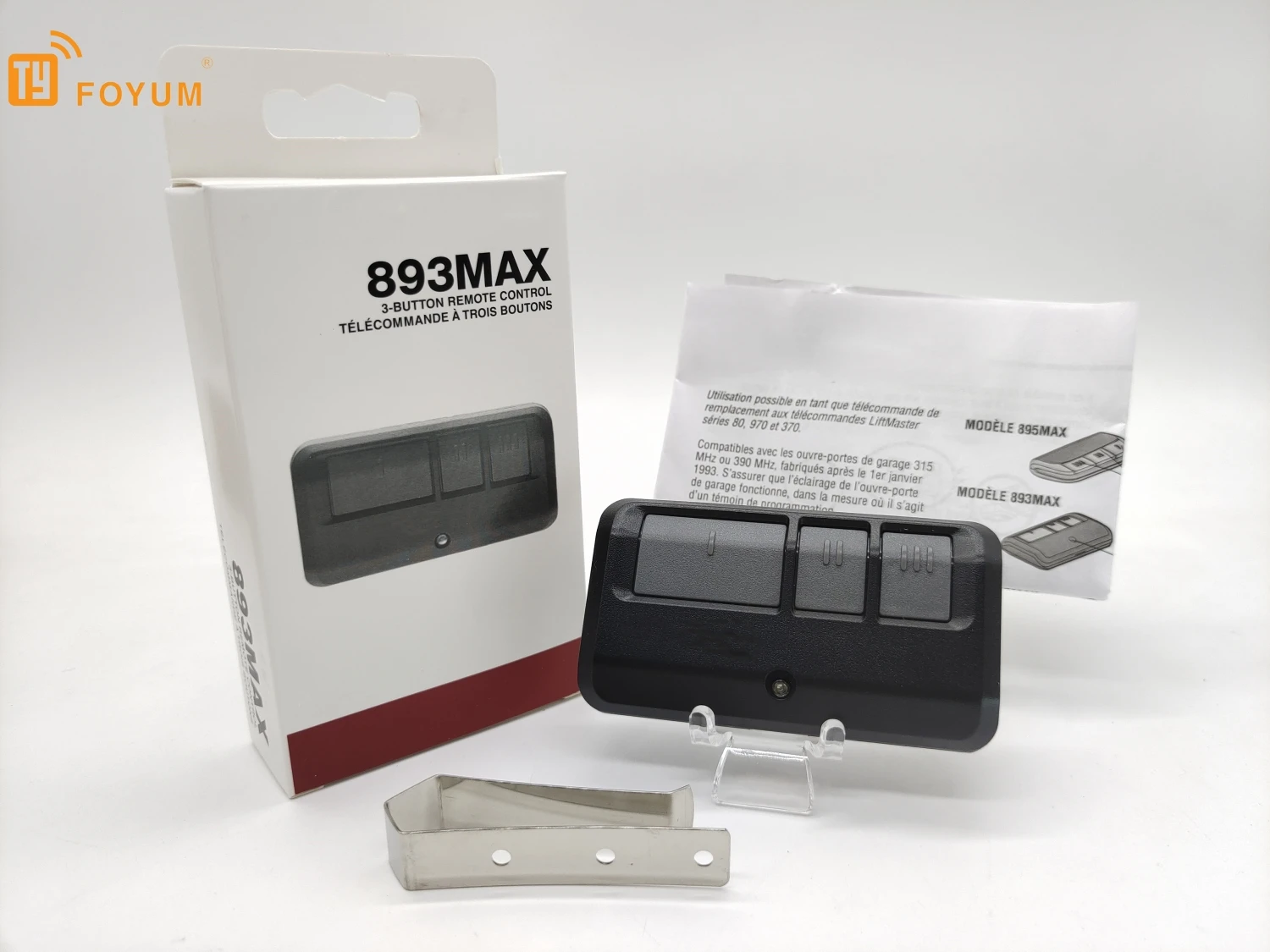
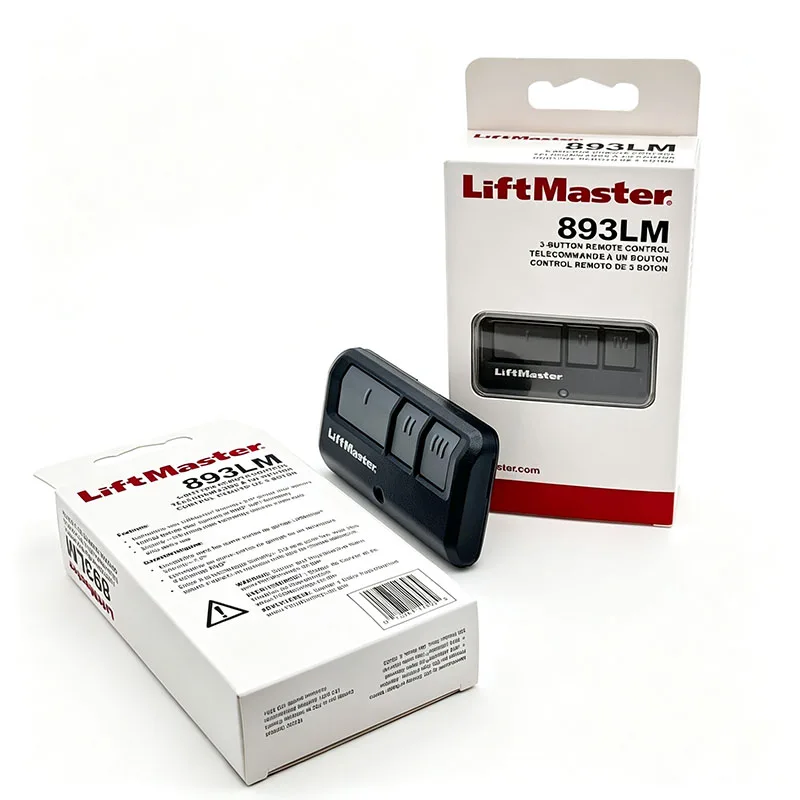
Catalogue references for the specification above: 893MAX compatible garage door remote and 893LM 953ESTD multi-model garage remote pack. Both are MOQ 100 pcs per SKU, with a 7-15 day lead time and one free sample per SKU. They are supplied on our own PCBA and housing tooling.
Where to Order
- Garage Door Remotes — 315MHz / 433MHz / 868MHz by market
- RF Remote Controls — multi-band cloners and keyfob remotes
- Locksmith Tools — duplicators, shells and blanks
Terms
MOQ 100 pcs per SKU. One free sample per SKU ($30 DHL, buyer pays). Lead time 7-15 days. Payment T/T 30/70. Prices EXW Xiamen. 100% functional test on every unit; a third-party QC report at AQL 5% is available on request. CE-RED, RoHS and FCC Part 15 documentation; RCM available.