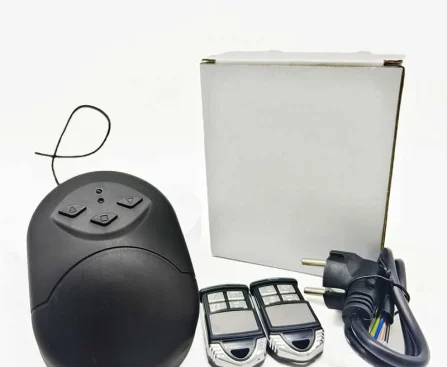
The Problem With Ordering the Motor Separately An installer who buys the motor from one supplier and the controls from another has two lead times, two shipping costs, and a site visit that cannot start until both have arrived. On a small job that overhead is invisible. Across a year of jobs it is the […]
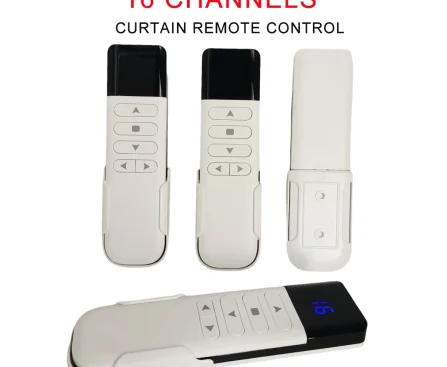
Channel Count Is a Customer-Facing Decision The installer is not choosing a technical specification. They are choosing what to hand to an end customer who will press buttons without reading instructions. A five-channel handset that matches how the building actually works is worth more to the installer than a sixteen-channel handset that leaves the customer […]
The Calculation Behind the Catalogue Number A tubular motor is specified by the torque it can deliver at the curtain, not by the power it draws. Two motors with the same wattage can differ substantially in torque depending on the gearbox ratio, and that ratio is what determines whether the shutter runs or stalls. This […]
Why the Motor Is the Hard Part of a Shutter Job Measuring a shutter is quick. Sizing the motor correctly is not, because the torque requirement scales with shutter area, tube diameter and fabric weight, and an undersized motor shows up as a slow-running curtain that strains at the bottom of travel. Installers who get […]
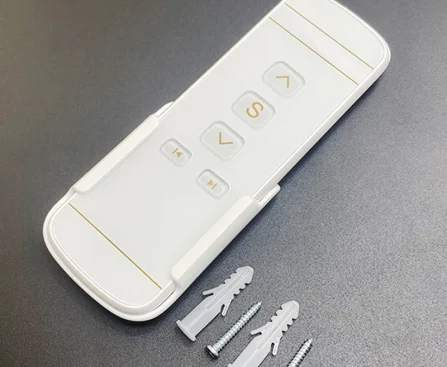
Why the RTS Handset Is the Volume Repair Part An RTS installation is commissioned once and then serviced for years. The motor and the receiver stay; the handset gets lost, dropped, or handed over without a spare. For an installer, that means the replacement handset is a repeat-order item rather than a project item, and […]
Two Distinct OEM Questions OEM supply for this category splits into two unrelated problems. One is private label: your brand on our housing and our electronics underneath. The other is protocol adaptation: making our electronics pair with receiver families that were not part of the original design brief. The first is a tooling and artwork […]
The Disclosure Question The garage-door channel includes products whose honest description is “makes a copy of an existing remote”. That is a legitimate locksmith tool with legitimate uses, and it is also the kind of product that creates legal and reputational exposure for a distributor who does not state plainly what it does. The safest […]
Why the Big Three Names Drive Aftermarket Demand The garage-door aftermarket runs on three installed bases: European BiSecur and similar systems, North American rolling-code systems, and the general fixed-code legacy market. Each has its own band, its own code system and its own certification requirement. A distributor buying into this category is effectively choosing which […]
When Private Label Is Worth the MOQ A hardware store chain or an installer supply network sells the same handful of remote models at every branch. At that volume, a private-label programme stops being a marketing expense and starts being a margin decision: your brand on the shelf, our electronics underneath, and no trade-distributor margin […]
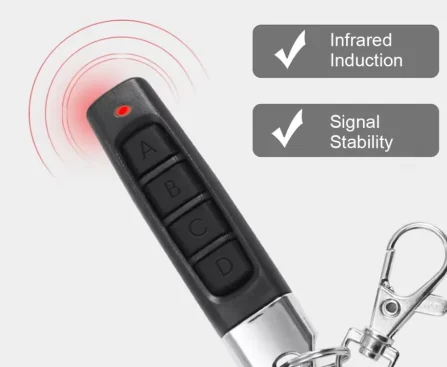
Two Different Products Called “Universal” The word universal covers two products that do completely different jobs. A cloner captures an existing remote’s signal and replays it. A self-learning handset is programmed by the receiver, the way a rolling-code system works. Buyers who order one expecting the other generate the returns, so the distinction has to […]