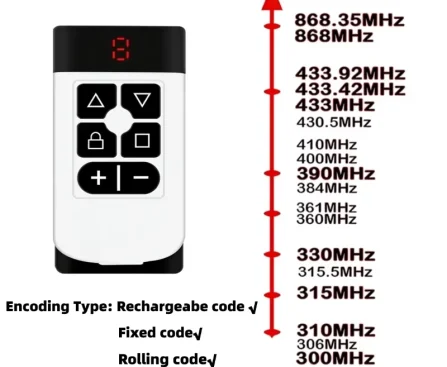
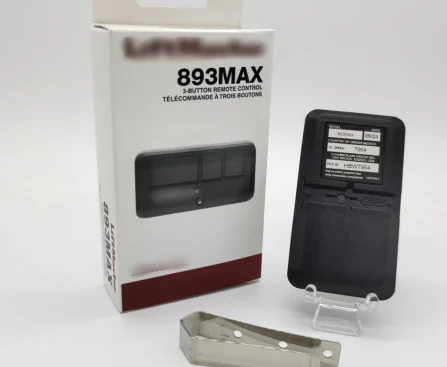
The One Question That Decides Everything Before any remote is ordered, the band has to match the market. This sounds obvious and it is still the most common reason a batch of remotes arrives and cannot be used. The band is a legal allocation, not a brand preference: 315MHz is the North American allocation, 433MHz […]
Where the 4-Band / 8-Band Split Comes From The four-band format covers the ranges that dominate garage and gate work: 280–315MHz, 330–350MHz, 365–390MHz and 433–868MHz. The eight-band format adds lower and higher slices that matter in specific markets rather than across all of them. A distributor choosing between them is choosing how much of their […]
Why Multi-Frequency Became the Default A single-band remote covers one frequency. A garage door, a gate, and a legacy light industrial opener can sit on three different bands in the same building, and a technician carrying three handsets loses time on every call. The multi-frequency remote collapsed that into one device, and it is now […]
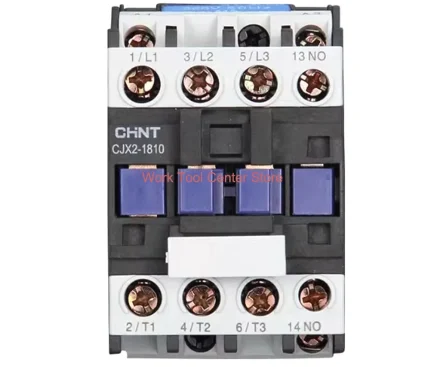
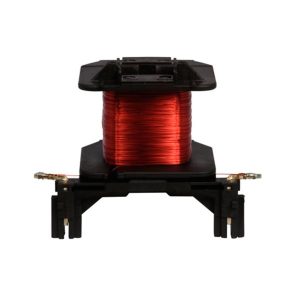
Why Buyers Order the Same Frame in Four Coils A panel builder working one region usually fits several frames with the same coil voltage, then carries a second coil voltage for a control panel that runs on a different supply. The practical effect is that a distributor ends up holding a small number of frames […]
Why Coil Voltage Is Where Substitution Goes Wrong A contactor frame size is easy to match. The coil voltage is where a substitution fails in the field, because a 24VDC coil on a 230V control supply will not pull in, and a 230VAC coil on a 24V supply will sit and hum. The two heavy-duty […]
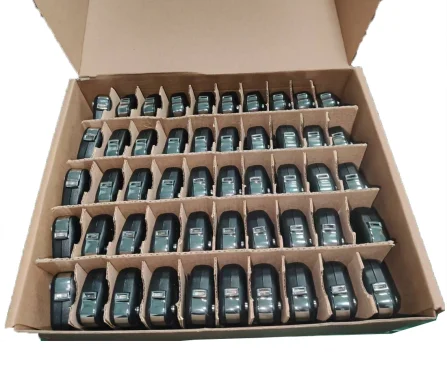
What an MOQ Actually Covers MOQ is not a marketing minimum. It is the smallest batch that amortises the fixed costs of a production run: setup time, the press or SMT line, packaging setup, and the QC pass. Our MOQ is 100 pieces per SKU, which is low for this category and reflects that most […]
What Rolling Code Actually Requires From the Manufacturer A rolling-code transmitter is not a fixed-code transmitter with a chip change. Every transmission must produce a new valid code, and the receiver must reject a replayed one. That means the code-generation logic, the transmit path, and the timing all have to be designed and tested together. […]
The Legal Line Every Importer Has to Understand Housings, shells and non-electronic parts are ordinary importable goods. Transponder chips and immobiliser coding devices are treated differently in many jurisdictions, and selling or using them can require authorisation. Before anything else, establish which side of that line your products sit on — with a customs broker […]
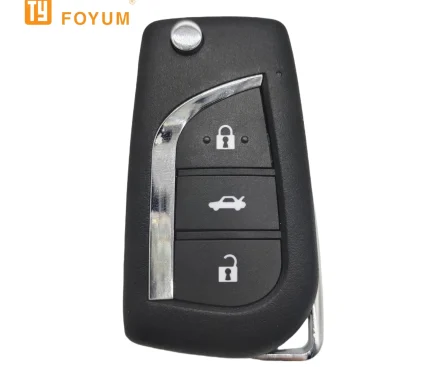
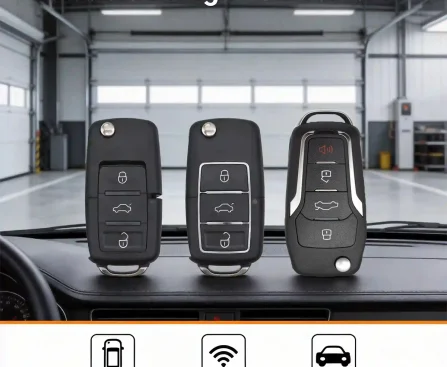
Why the Shell Is a Separate Purchase Decision A locksmith replacing a car key housing is usually doing a cosmetic or damage repair on a vehicle whose electronics still work. That means the shell is bought separately from the transponder and the remote board, and it is bought on a different cycle: cheaper, faster-moving, and […]
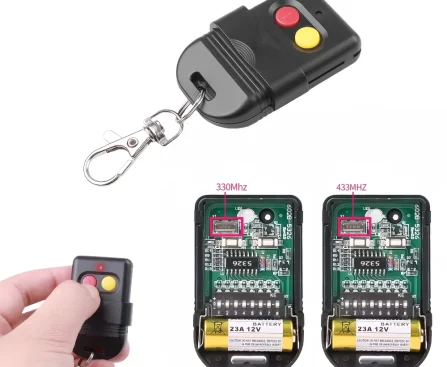
Why 330MHz Still Has a Market Most volume remote supply sits in the 315MHz and 433/434MHz bands. 330MHz persists because a large installed base of older systems runs on it, particularly in certain European markets, and because it sits outside the bands most commodity suppliers bothered to cover. For a distributor, that makes it a […]