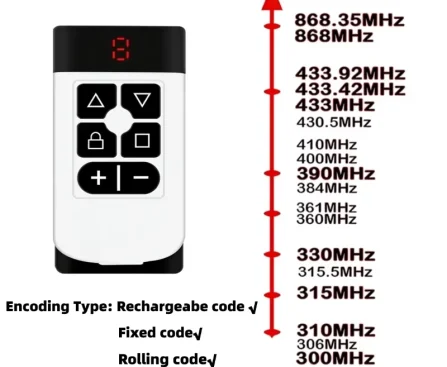
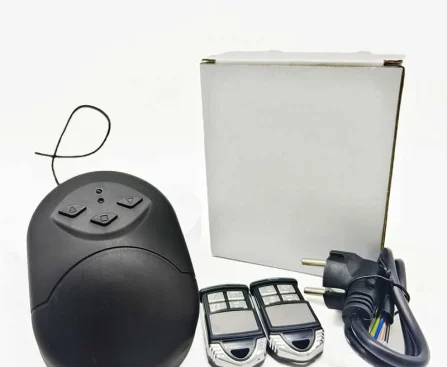
Two Different Products on the Same Shelf A shell is a housing. A blank is an uncut key. They sit next to each other in a locksmith’s stockroom, they are both cheap, and they are frequently confused in ordering conversations. The distinction matters because they have different failure modes, different returns profiles, and different replacement […]
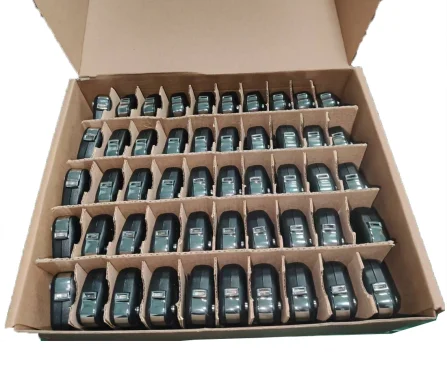
What a Duplicator Actually Does A multi-band duplicator captures the signal from an existing remote and replays it. That single function determines everything about how it is sold: it works on fixed-code systems, and it does not work on rolling-code systems, because a rolling-code receiver rejects a replayed signal by design. So the commercial question […]
Why the Shell Is the Fast-Moving Part of the Bench A locksmith’s fastest repeat item is rarely a programmer or a decoder. It is the shell — the plastic housing that sits on an existing remote board when the original casing is cracked, scuffed or lost. It costs little, it moves constantly, and a bench […]
When Private Label Pays for a Shutter Supplier A shutter installer with a technician network and a repeat-order book is, functionally, a brand. Customers ask for their parts by the installer’s name, not the motor manufacturer’s. At that point private label stops being a marketing cost and becomes the difference between supplying a product and […]
The Complaint Every RTS Supplier Receives “It will not program.” On an installed shutter that has already worked, this is almost never a failed handset. In order of frequency it is a reset receiver, a power interruption during learning, a multi-remote limit on the receiver, or a battery that reads acceptable at rest and fails […]
Same Tube, Different Job Both products use a tubular motor in a rolled fabric tube, which makes them look interchangeable on a shelf. They are not. An awning motor is specified for a short, frequently-operated travel with strong wind exposure; a roller-shutter motor is specified for a long, rarely-operated travel with a heavy curtain load. […]
The Problem With Ordering the Motor Separately An installer who buys the motor from one supplier and the controls from another has two lead times, two shipping costs, and a site visit that cannot start until both have arrived. On a small job that overhead is invisible. Across a year of jobs it is the […]
Channel Count Is a Customer-Facing Decision The installer is not choosing a technical specification. They are choosing what to hand to an end customer who will press buttons without reading instructions. A five-channel handset that matches how the building actually works is worth more to the installer than a sixteen-channel handset that leaves the customer […]
The Calculation Behind the Catalogue Number A tubular motor is specified by the torque it can deliver at the curtain, not by the power it draws. Two motors with the same wattage can differ substantially in torque depending on the gearbox ratio, and that ratio is what determines whether the shutter runs or stalls. This […]
Why the Motor Is the Hard Part of a Shutter Job Measuring a shutter is quick. Sizing the motor correctly is not, because the torque requirement scales with shutter area, tube diameter and fabric weight, and an undersized motor shows up as a slow-running curtain that strains at the bottom of travel. Installers who get […]