Email Us
Joanna@rfmando.com
Call Us via whatsapp
+8618960313731
Get Started
Learn More

HS Code Classification: Pitfalls That Cost Importers Real Money

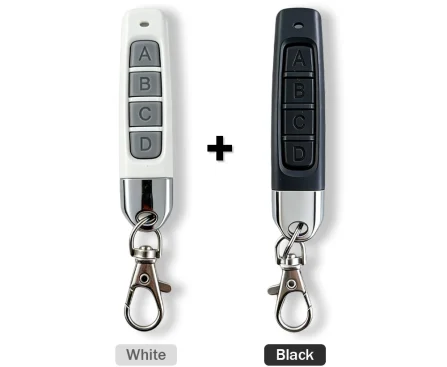
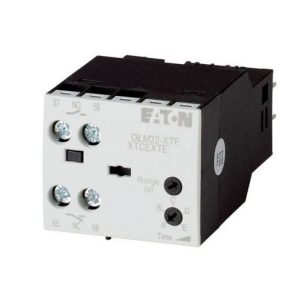
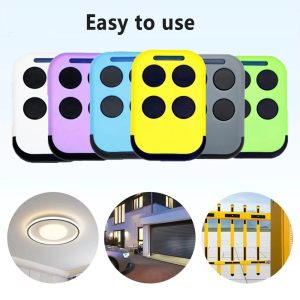
Why the Code Is Not Obvious A garage-door remote, a contactor, and a tubular motor can all plausibly be classified as “electrical equipment”, and all three can be classified under different headings depending on the tariff schedule of the destination country. The classification sets the duty rate, and in some cases determines whether a certificate […]
CE Marking: Cost, Timeline and What Actually Has to Be Done

Why This Page Exists CE marking is the single most misunderstood cost item in importing electrical products into the European Union. Buyers either overestimate it and avoid the market, or underestimate it and discover at customs that the documentation does not cover their variant. Both are avoidable. What CE-RED Actually Covers InstrumentCoversApplies toNote Low voltage […]

The Hidden Specifications That Decide Product Lifetime

The Specifications Nobody Quotes Are the Ones That Fail When two quotes arrive for the same product at different prices, the visible specifications — rating, voltage, dimensions — are usually identical. The difference that shows up eighteen months later is in the specifications nobody put on the quotation: capacitor grade, contact plating, transistor grade, housing […]

Private Label vs Wholesale: When to Switch, and at What Volume

The Question Is Reorder Volume, Not Brand Ambition Private label is usually discussed as a branding decision. On a component or a remote, it is a logistics decision: it changes whether your customer reorders from you by name or from the manufacturer, and that changes the reorder conversation. The volume at which it pays is […]

AQL Inspection Explained: IQC, IPQC, FQC and OQC for Importers

What AQL Actually Is AQL means acceptable quality limit. It is the quality level at which a lot is judged acceptable under sampling inspection. A common commercial standard for electrical components is AQL 5%, which does not mean five defects per hundred units are expected. It means a lot is rejected when the sample inspection […]

How to Evaluate a Chinese Supplier: 9 Signals That Actually Predict Field Quality

The Question Behind the Question Most buyers evaluating a Chinese supplier ask about price and lead time first, because those are the numbers they can compare. Those two numbers are also the least predictive of whether the shipment will work. A supplier who quotes a month earlier and fifteen percent cheaper than the market is […]

Panel Builder Restocking: Contactor MOQ, Lead Time and Stock Depth

Restocking Is a Different Decision From First Ordering A first order is a test: one frame, one coil, one reference, sent to establish whether the supplier ships what they say. Restocking is a different calculation. It asks how much of a frame to hold so that the next panel builder’s order ships same day, and […]

Eaton DILM Certification: CE-RED, RoHS, FCC Part 15 and RCM for Importers

Certification Is a Market Question, Not a Product Question The same contactor can be perfectly legal in one market and unsellable in another, because the certification requirement follows the destination rather than the product. A buyer importing into the European Union needs CE-RED and RoHS documentation for the EU; the same unit into Australia needs […]

Contactor Cross-Reference: DILM vs LC1D vs AF for Wholesale Buyers

What a Cross-Reference Is and Is Not A cross-reference table tells you which part number corresponds to which. It does not tell you whether the part is a substitute. Those are different questions, and conflating them is how a substitution arrives at a panel builder’s bench with the wrong auxiliary contact count. Frame-Level Correspondence DILM […]