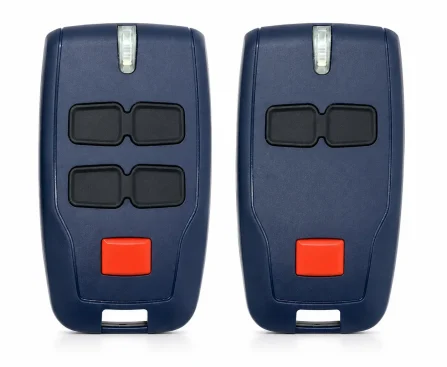
What Private Label Changes and What It Does Not Private label on a remote changes the housing, the artwork and the packaging. It does not change the rolling-code implementation, the frequency allocation, or the certification obligation. Buyers who expect the programme to change all three misunderstand it, and buyers who understand that it changes only […]

Two Standards, Two Different Questions EN 12453 and EN 12978 are frequently quoted together and answer different questions. EN 12453 covers the safety of power-operated gates, barriers and doors for use by persons, and it deals with crushing, shearing and trapping hazards to people. EN 12978 covers power-operated pedestrian gates for use on escape routes, […]
Why Commissioning Sheets Save Money A commissioning sheet is not paperwork. It is the record that converts a dispute about a drive, a handset or a safety edge into a conversation about settings. Most callbacks in this product category are not manufacturing defects; they are commissioning omissions — a safety edge that was never tested, […]
Throughput Is a Design Constraint, Not a Feature A tripod turnstile, a speed gate and a barrier serve the same purpose at the boundary of a site, and they differ mainly in throughput and in what they physically prevent. A turnstile prevents tailgating by requiring one body through at a time. A speed gate does […]
Why Sliding Gates Generate Callbacks A sliding gate that stops halfway, reverses on an obstruction, or drifts out of square after a few weeks is almost always a mismatch between the drive thrust and the actual gate load — not a defective motor. The load includes the gate weight, the track friction, the gradient and, […]
Channel Count Is a Site Decision, Not a Product Decision A one-channel handset for a single gate is correct and cheap. A four-channel handset on the same site is correct if the site has a second gate, a barrier and a lighting group sharing one control panel. The buyer who orders four channels “to be […]
Three Numbers Decide the Operator A barrier operator is specified by boom length, barrier weight and cycle frequency. Quoting on boom length alone is the most common way to under-size an installation: a long boom in a windy site, or a long boom on a busy car park, needs a different duty rating from the […]
Why Payment Terms Are a Risk Decision, Not an Administrative One The standard terms in this industry are 30% deposit and 70% before shipment. That arrangement protects the supplier, which is why it is standard. For the buyer it concentrates the risk in a specific window: the money has left your account and the goods […]
Why Audit at All If You Cannot Visit Most buyers cannot travel to Xiamen or Ningbo to inspect a supplier. That does not remove the need for verification; it changes the form verification takes. A video walkthrough, a request for dated production photographs, and a demand for specific process artefacts will separate a manufacturer from […]
Why the First Order Is Different from Every Order After It A first trial order is not a smaller version of a repeat order. It is a test of a supplier you have not worked with, on a product you have not seen in your market, with documentation you have not verified. The risks are […]